Projects
Defect characterization of diamond for semiconductor applications
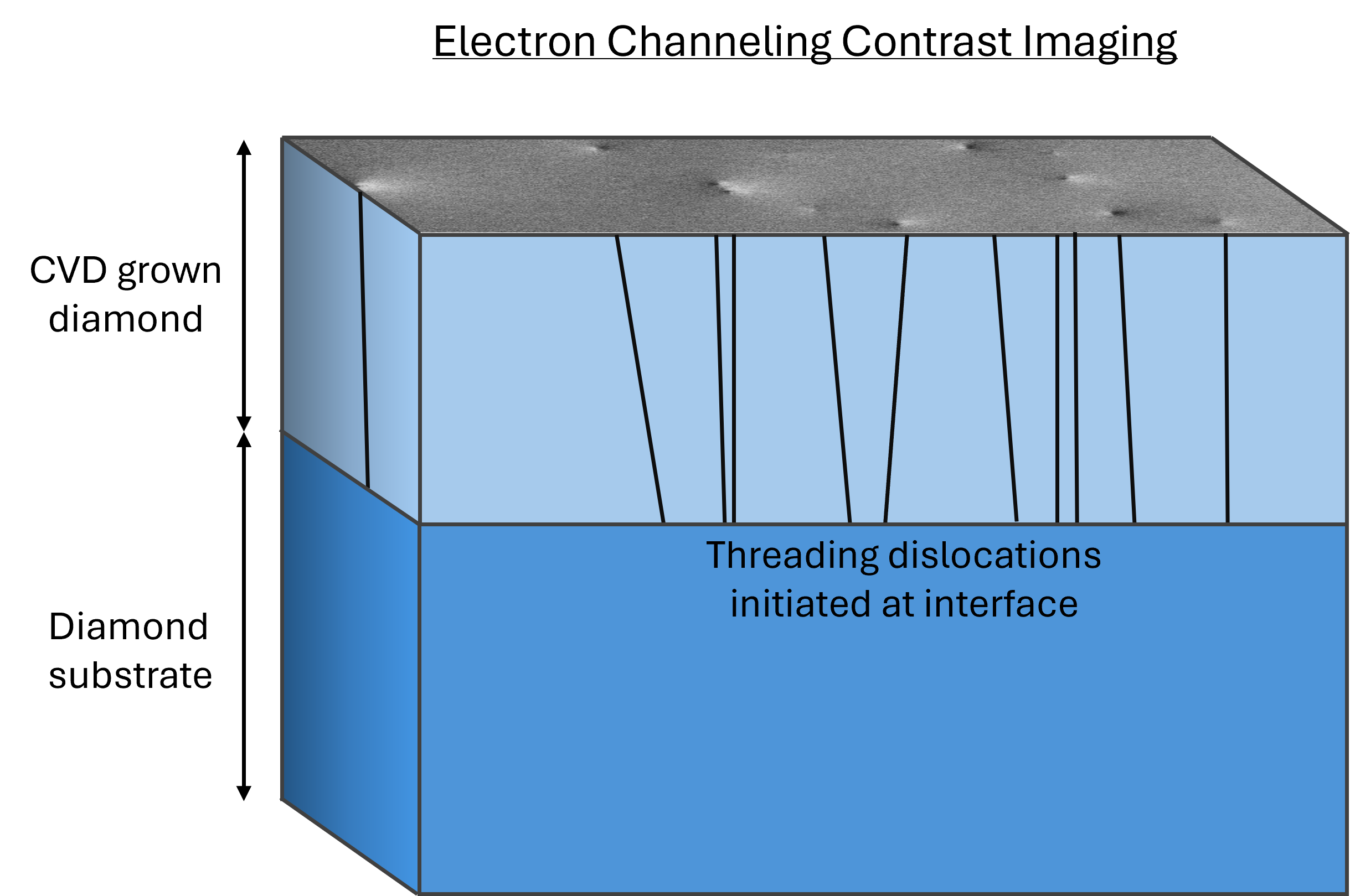
Diamond shows great promise for next generation power electronics and quantum sensing devices due to its large band gap, high thermal conductivity, and optically accessible point defects. However, the development of scalable, defect-free diamond substrates remains a challenge. My work focused on developing non-destructive electron microscopy workflows (CL, ECCI) that all for rapid and reliable characterization of defect density, distribution and character in CVD grown diamond. I focused on the effect that processing conditions, such as impurity type and level, along with sample preparation has on the reliability of these characterization techniques.
Thesis upcoming June 2026
Publication in progress
Advanced Tolerant Coatings for Nuclear Fuel Rods in Light Water Reactors
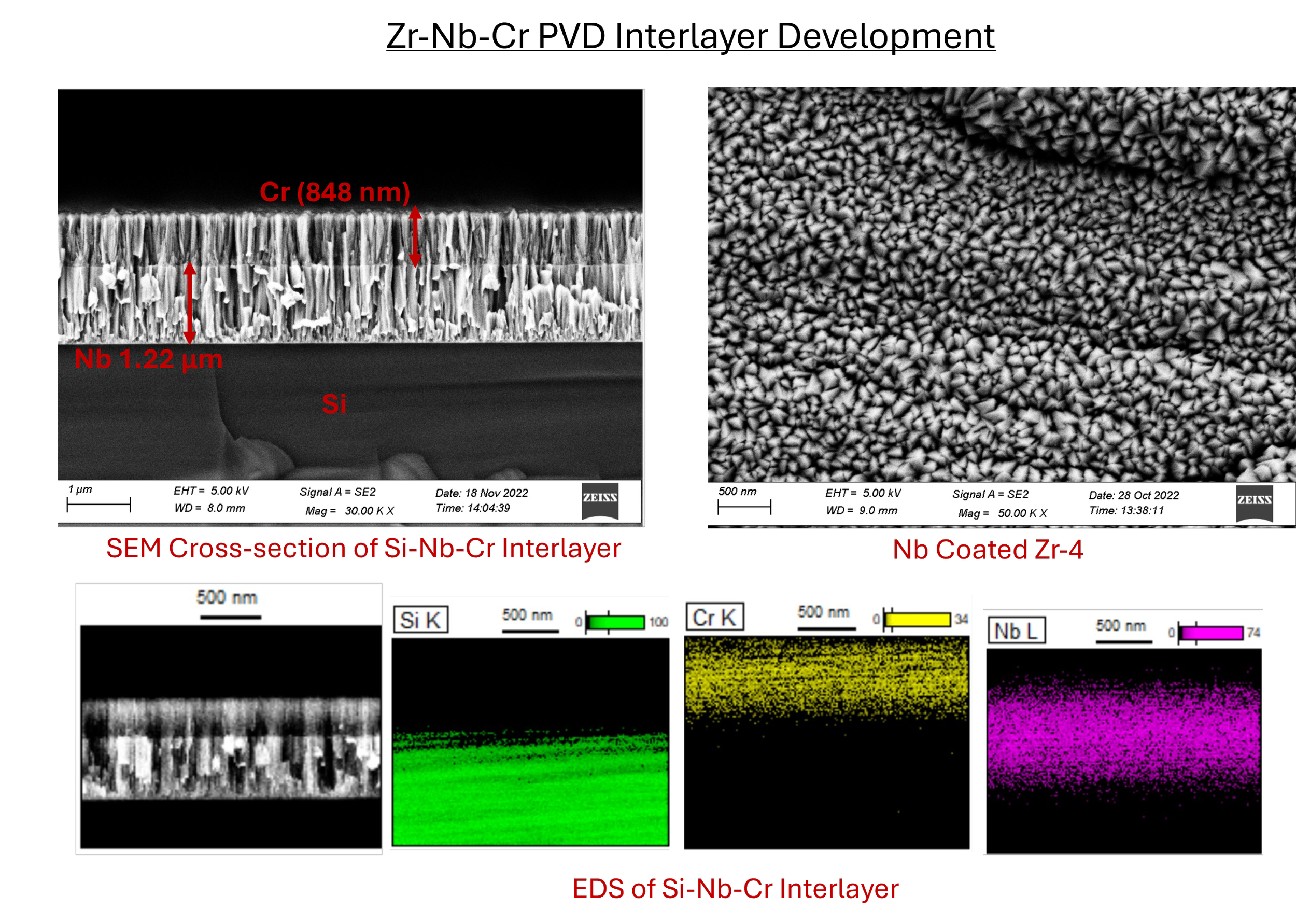
Following the disaster at the Fukushima-Daiichi nuclear power plant in 2011, researchers have looked to develop oxidation-resistant coatings on nuclear fuel rods to improve their performance under loss of coolant accident conditions. Chromium thin film coatings show promise due to chromium’s low oxidation rate. However, chromium reacts with the zirconium fuel rod to form a low melting temperature eutectic. Therefore, my work looked to develop an intermetallic diffusion barrier using physical vapor deposition (PVD). In this project, I ran the in-house PVD development and was responsible for preparing samples, depositing the thin film dual-layer coatings with a variety of barrier materials, and then measuring the microstructural and mechanical performance of these coatings using high-temperature testing, SEM/EDS, XRD, and nanoindentation.
Investigation of laser texturing as a surface preparation method to improve surface adhesion of thermal spray coatings
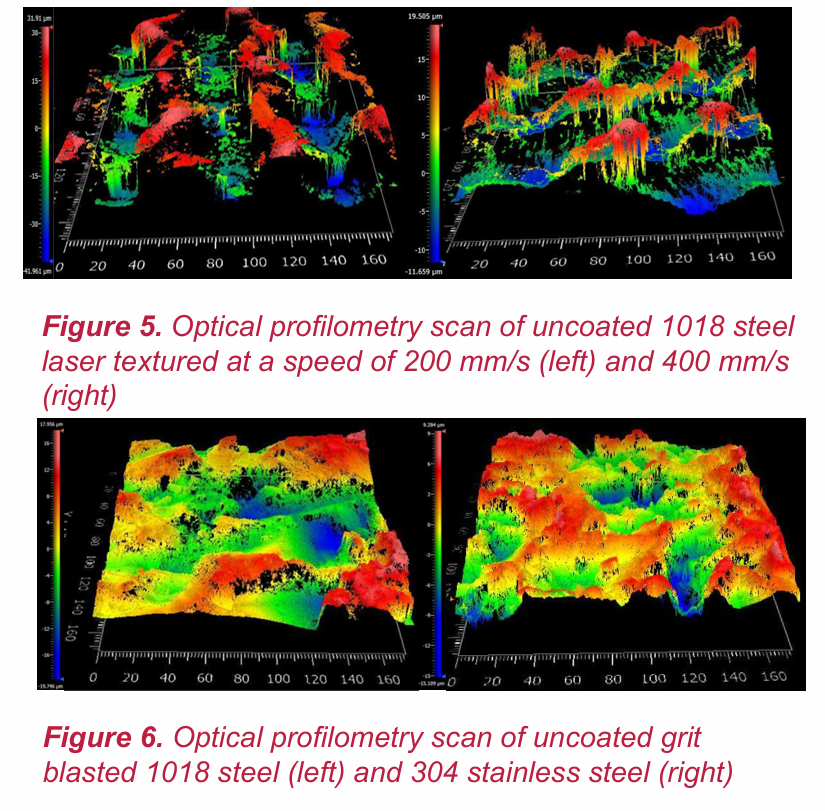
In this capstone project, I worked on a team of six engineers in partnership with TST Engineered Coating Solutions to compare two surface preparation methods: laser texturing and abrasive blasting. We designed and executed a year-long experimental plan involving more than 60 thermal spray coated samples, varying substrate type, coating material, and surface preparation method. To investigate the performance of these coatings, we used SEM, EDS, optical profilometry, and adhesion testing. Based on performance, environmental impact, worker health and safety, cost, and long-term process potential, we recommended that TST adopt laser texturing into its manufacturing process.
Improving the processability of thermal management materials through the addition of coupling agents
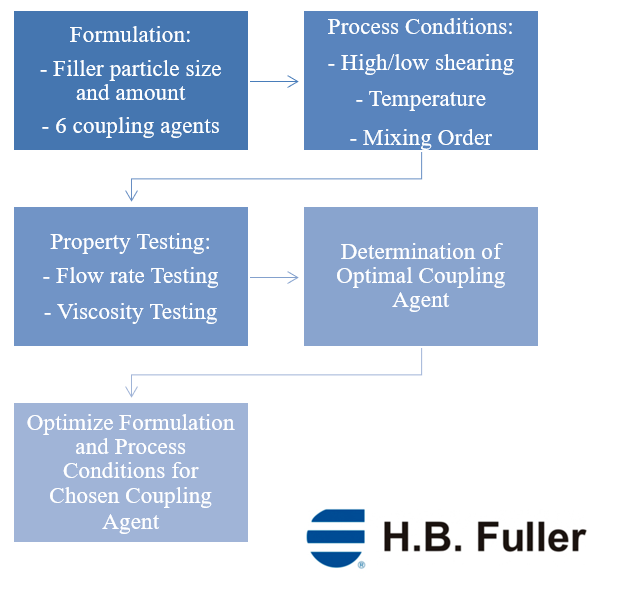
During my internship with H.B. Fuller, I worked on developing 2K thermal management materials for electronics applications. These materials are designed to improve heat transfer across rough interfaces by combining a pliable polymer matrix with conductive metal oxide fillers. A major challenge, however, was that maximizing thermal conductivity required very high filler loading, which hurts processability. My role was to evaluate eight different coupling agents by formulating and manufacturing several batches of thermal management materials, varying factors such as coupling agent concentration, binder content, temperature, and mixing speed. I then used flow rate and rheology testing to compare processability and identify the strongest coupling agent candidate, which I further optimized.
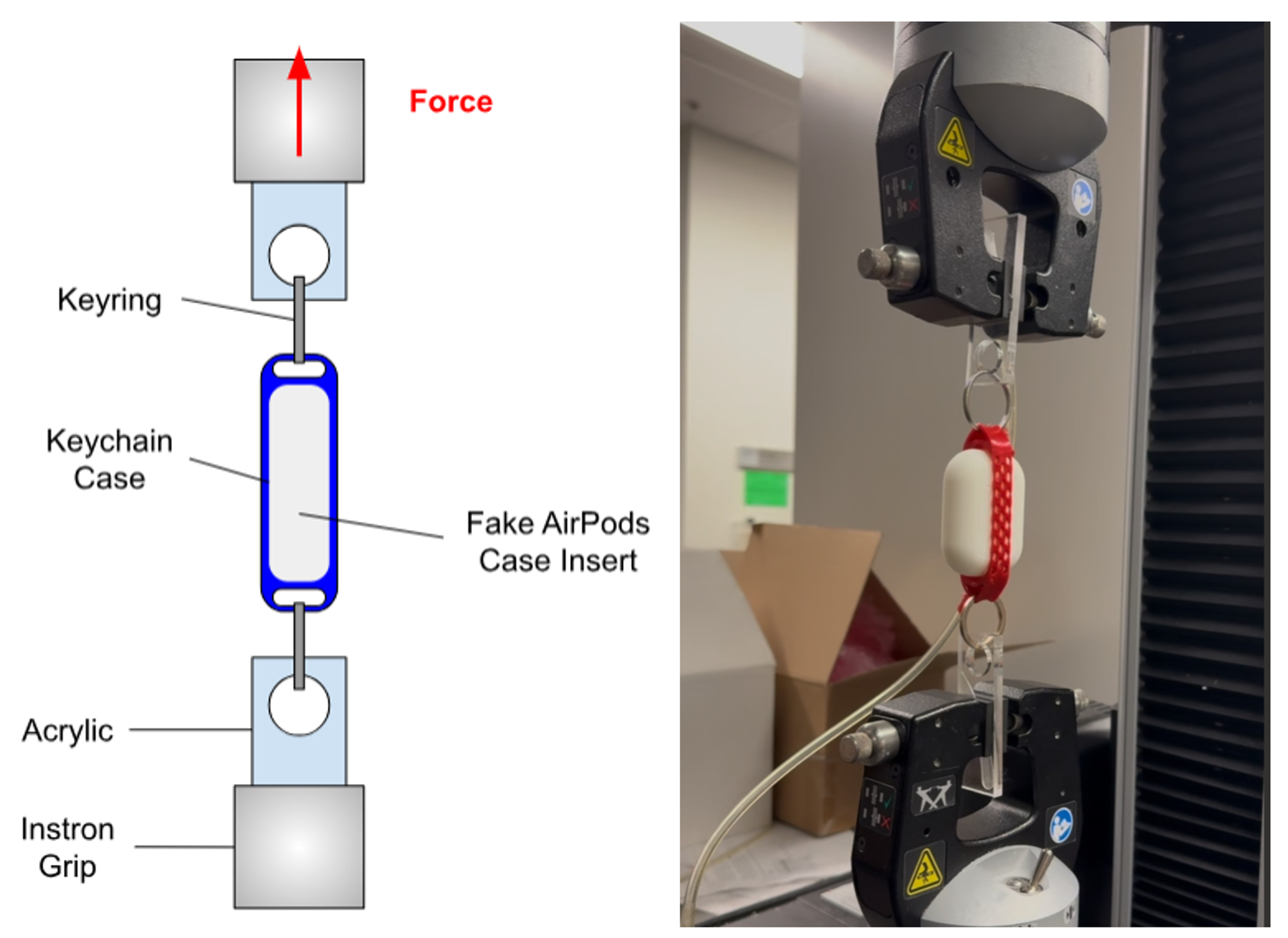
Design, printing, and testing of an AirPod case to determine the effects of print pattern and thickness on mechanical behavior
In this quarter-long project, I worked with a team of five engineers to design and manufacture a 3D-printed case for headphones. This involved utilizing CAD to design and optimize case dimensions, cutout positions, and key-chain ring slots while staying within set benchmarks for cost and print time. To test the mechanical performance of our proposed design, we utilized fatigue testing and digital image correlation (DIC). We compared the effect that infill pattern and case thickness has on the overall mechanical performance of our product, considering metrics such as elastic modulus (E), yield strength, and ultimate tensile strength (UTS).